Professional Substrates for Consistent Results
Nord Agri supplies professional peat substrates designed for a wide range of crops and growing applications. Carefully selected peat structures and formulations support balanced moisture retention, aeration, healthy root development, and consistent performance throughout the growing cycle.
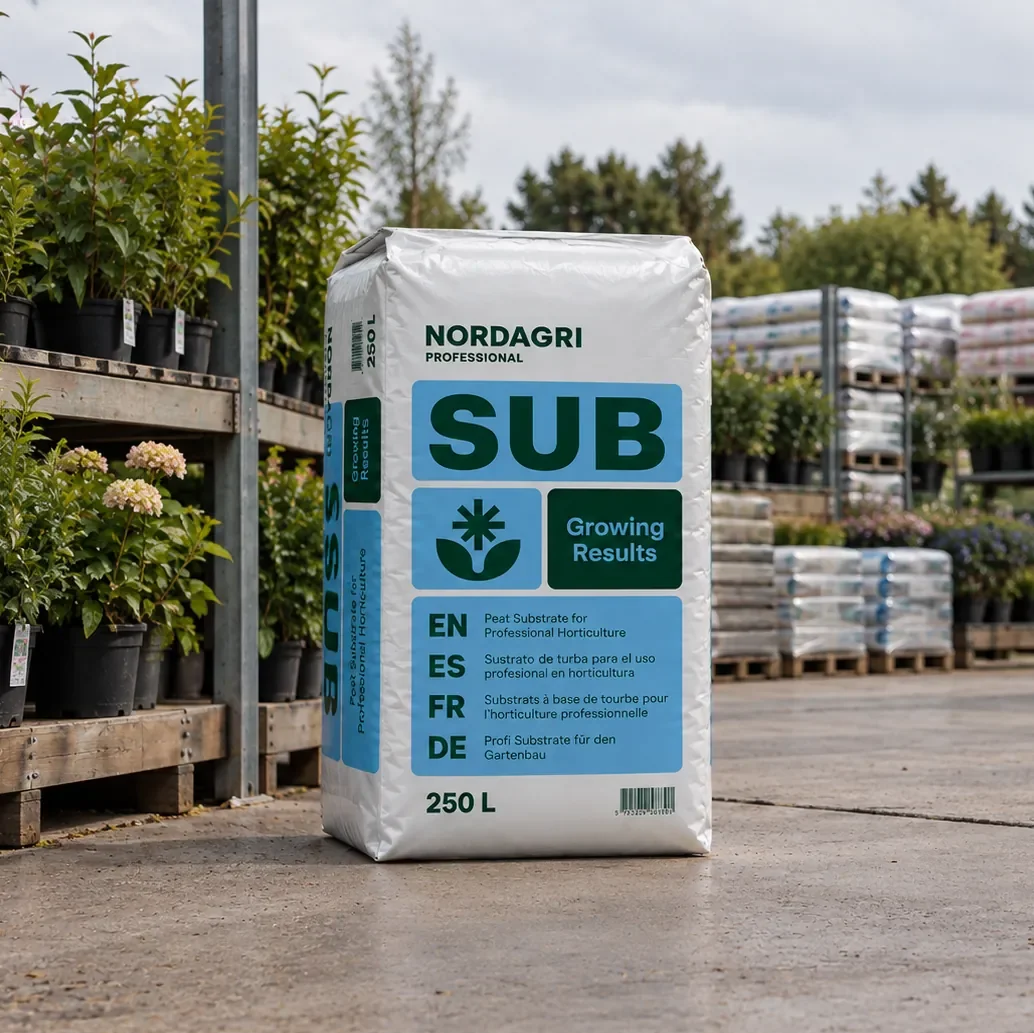
Designed to Support Better Growing Results
Carefully selected peat structures and formulations help create the right balance of moisture retention, aeration, and root-zone stability. This supports healthy plant development and more consistent performance throughout the growing cycle.
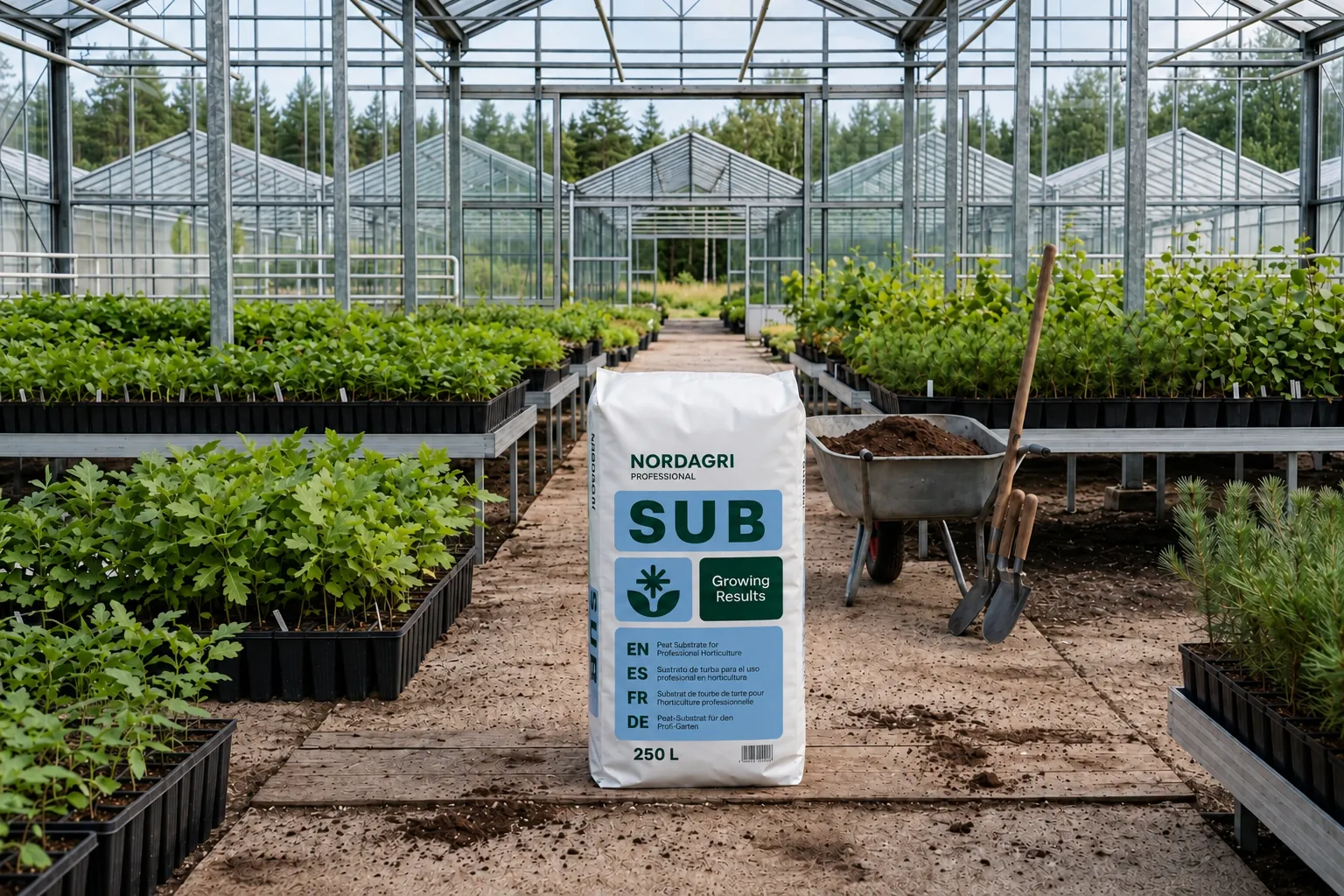

Consistent Growing Performance

Balanced Moisture & Aeration

Healthy Root Development
Frequently asked questions
Practical answers about choosing, storing and using these products.
Compressed peat substrate should be loosened gradually and with minimal mechanical force to preserve its original structure. This is especially important for coarse substrates, as intensive mixing, grinding, or high-speed equipment can break down larger peat particles and increase the proportion of fines, changing the intended physical properties of the substrate. Appropriate equipment should therefore be selected for gentle loosening before use.
The substrate should be filled and lightly compacted to provide good contact between the root system and the peat without excessively reducing air space. Irrigation should follow immediately after potting or transplanting to ensure proper root-zone contact, while young plants should not be positioned too deeply because further settling can occur after watering and compaction.
This effect, often referred to as silting, can occur when a substrate contains too high a proportion of fine particles for the chosen container or when irrigation is excessive. Fine material may migrate toward the bottom of the pot, reducing oxygen availability in the root zone. For longer-term crops, a structure with a higher proportion of sod peat can help maintain better aeration and structural stability.
Changes in pH during cultivation do not necessarily indicate a substrate quality issue. Irrigation water quality and fertilizer composition are important influences: nitrate-based fertilization and harder water can increase pH, while ammonium-based fertilization and softer water can lower it. Regular monitoring of the crop, irrigation water, and substrate is therefore important throughout the growing period.
The effectiveness of a wetting agent depends strongly on storage conditions. Exposure to direct sunlight and significant temperature fluctuations can accelerate degradation; the document notes that effectiveness is generally expected for around 6-8 months, although it may decline earlier under unfavorable conditions. Wetting agents are primarily intended to improve initial rewetting during the first weeks of cultivation.
Pure peat is up to 98 % organic matter, and mould is attracted to organic material. To turn peat into a growing substrate, lime and fertilizer are added, which also makes it easier for microbes to live. Saprophytic fungi and bacteria, which feed on dead plant material, and airborne spores that are always present can then settle in the peat.
Open packs with visible mould and mix them thoroughly so they get as much air as possible; the mycelium shrinks quickly once aerated. These fungi are entirely saprophytic and do no harm to the crop.
In the greenhouse, humid conditions favour fungal growth on the substrate surface, usually from airborne spores. Keep the environment drier and make sure substrate and crop are well aerated: irrigate so the surface can dry out, and lower the relative humidity where possible. No fungicide on the market works well against saprophytic fungi, and fungicides have little effect on soil-borne pathogens.
Algae spores are always present in the environment. Common sources are irrigation water, hoses and pipes, greenhouse benches and structures, and wind from the surroundings. Algae need a pH of 5-7 (they die at pH 4), nitrate, phosphate and CO₂, free water (especially on horizontal surfaces), warmth, high relative humidity and shade.
To counteract algae growth:
- cover rainwater tanks and add oxygen to rainwater to drive out CO₂;
- filter irrigation water;
- keep the crop as dry as possible, for example with a coarser substrate for better drainage and air;
- use as little water as possible inside the greenhouse, ventilate well and lower the relative humidity;
- reduce shading where possible and lower the risk of condensation;
- repair leaking roofs and pipes, and keep the greenhouse clean;
- cover seeds with sand or vermiculite where the crop allows;
- use an algaecide only as a last resort, as it is toxic.
Peat substrates should be stored in a cool, dry, and protected environment, away from direct sunlight and precipitation. A first-in, first-out stock rotation is recommended, and pallets should preferably be stored below approximately 25°C to help preserve product characteristics during storage.
Finer peat structures generally retain more water, while coarser structures provide greater air capacity and drainage. Selecting the appropriate structure therefore depends on the crop, pot size, irrigation strategy, and required balance between moisture retention and root-zone aeration.
Irrigation should be matched to the substrate structure, crop requirements, and stage of development. Water should be applied evenly and in a controlled manner, allowing the substrate to re-aerate between irrigation cycles while avoiding both prolonged saturation and excessive drying. For best results, irrigation is generally carried out earlier in the day, with water temperature adjusted where sensitive crops require it.
Representative sampling is essential for meaningful pH and EC measurements. The document recommends collecting material from multiple pots and, for packaged substrates, taking samples from different positions within bags and pallets. The collected material should then be mixed uniformly before testing to provide a representative sample.
Initial fertilizer incorporated into a peat substrate provides a starting nutrient supply rather than nutrition for a fixed period. Its availability depends on factors such as crop requirements, irrigation and leaching, substrate characteristics, water quality, and growing conditions. Professional growers should monitor crop development and substrate EC and adjust supplementary fertilization according to actual plant demand.
Nordagri offers a wide range of recipes for different needs, and choosing the right recipe for each crop and nursery is the basis of a successful crop. If a recipe turns out too coarse or too fine for your nursery, contact your Nordagri sales contact. Based on your crops, pot sizes and growing conditions, they will recommend a better-suited product from the range.
Fungus gnats go through four stages, egg, larva, pupa and adult, in about 21 days, with many generations a year. All stages live close to moist, decomposing plant material, algae and fungi, and a moist substrate surface is an ideal place to lay eggs. Infestations can occur in nurseries, greenhouses and indoor growing spaces. Because most of the insect’s life is spent as a larva or pupa in the substrate, control focuses on these stages rather than on the short-lived adults.
How to control them:
- avoid overwatering, improve drainage and let the substrate dry out sufficiently;
- remove standing water and fix leaks;
- remove breeding places such as moist grass clippings, immature compost, organic fertilizers and mulch;
- screen windows and doors;
- use yellow sticky traps to monitor and reduce the population;
- treat with Steinernema nematodes.
Talk to our team
Tell us about your crop, volumes and destination. We will recommend the right product.