


Sapropel Biostimulant
A sapropel-based liquid biostimulant for large-scale field agriculture, supplied in 1000 L IBC containers.

Product details
- Up to 50 % higher yield in field tests
- Harvest up to 2 weeks earlier
- Reduces fertilizer use by 25 %
- CE-marked
Broadacre and field crops in large-scale commercial agriculture
- Organic matter 2.27 %
- Dry matter 7.96 %
- Total nitrogen 0.18 %
- Total phosphorus (P₂O₅) 0.0077 %
- Total potassium (K₂O) 2.06 %
- Humic acids 1.8 %
- Fulvic acids 0.13 %
- pH 12.8
- Moisture 92 %
- Density 1.03 g/cm³
- Seed treatment: replace part of the seed-treatment water with 1-2 L of biostimulant per tonne of seed.
- Foliar application: 2 L/ha per application, 3-4 times per season, with at least 200 L/ha water. Nozzle size 0.03-0.09 mm, pressure 1.5-6 bar.
- In-furrow: 2 L/ha, nozzle size 0.03-0.09 mm.
- Fertigation and drip irrigation: 10 L per application, 3-4 applications depending on crop cycle.
Supplied in bulk only, in 1000 L IBC containers, for large growers and agricultural companies.
- Delivered door to door, from our factory to your warehouse, by sea or land
- Customs and export documents and insurance arranged for you
- Delivery terms: EXW, DAP, FOB, CFR or CIF
Contact our sales team for an offer.
Variants and data sheets
Form: liquid, sapropel-based
Application: seed treatment, foliar, in-furrow, fertigation and drip irrigation
Packaging: 1000 L IBC
Certificates
The Sapropel Biostimulant is CE-marked under EU Regulation 2019/1009, the EU Fertilising Products Regulation. The marking is based on yield increases shown in independent field trials. It is also certified by OMRI and Ecocert, for growers who need inputs suitable for organic farming.



Ask about this product
Prices, volumes, delivery or which variant suits your crop: send a short message and the team will reply by email.
Prefer to call? +371 67 266 800
Trial results
All figures are compared with an untreated control in field and greenhouse trials.
Ornamental cuttings
HUMUS SAPROPEL Biostimulant · Greenhouse rooting trial · Dianthus, Scaevola, Pelargonium
Results vary with season, soil, crop and management. Figures are trial averages and are not a guarantee of results on an individual farm.
Sapropel Biostimulant for Field Agriculture
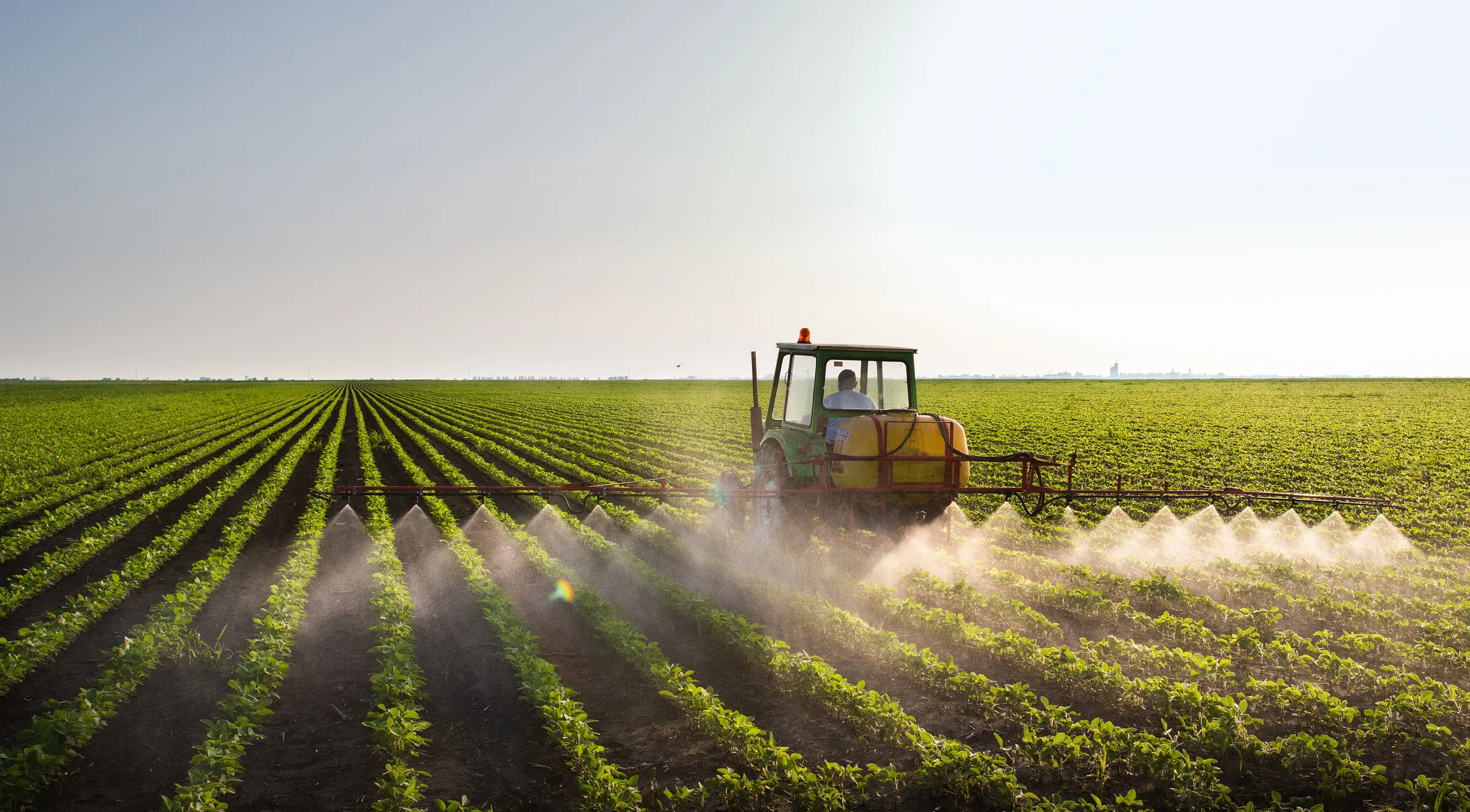
A sapropel-based liquid biostimulant developed for large-scale field applications and broadacre crop programs. Designed to support strong crop development and consistent performance across commercial agricultural operations.

Supporting Stronger Crops and Yield Potential
The sapropel-based biostimulant is designed to support crop development and help maximize yield potential across large-scale field applications. Its role is to strengthen overall crop performance where consistency, efficiency, and reliable results are essential.

Supports Crop Development

Supports Higher Yields
Built for Large-Scale Application
Frequently asked questions
A sapropel biostimulant is produced from naturally occurring freshwater lake sediments rich in organic matter and biologically active compounds. Nordagri’s formulation contains humic and fulvic acids together with naturally occurring nutrients that support plant development and nutrient uptake.
The biostimulant is designed to support root development, nutrient and water uptake, overall crop growth, and yield potential. It can also provide additional support to plants during periods of environmental stress.
The product is intended for a broad range of agricultural crops and can be incorporated into different crop management programs. The appropriate application strategy should be selected according to the crop, growth stage, and local growing conditions.
The product can be used through several application methods, including foliar spraying, seed treatment, in-furrow application, fertigation, and drip irrigation. For large-scale field agriculture, foliar and in-furrow applications can be integrated into existing field operations.
Yes. The biostimulant is designed to work alongside established fertilization programs rather than replace crop nutrition entirely. It is compatible with a wide range of fertilizers and can be incorporated into existing crop management programs.
Sapropel biostimulant is compatible with a wide range of fertilizers, plant protection products, and plant growth regulators. Compatibility and application conditions should nevertheless be confirmed for the specific tank mix and crop program before large-scale use.
The biostimulant can be used at different stages of crop development, beginning with seed treatment and early establishment and continuing through later growth stages. Application timing should be adapted to crop requirements and the objective of the treatment.
For broadacre farming, the main value is its ability to complement an existing crop program while supporting root development, nutrient uptake, crop performance, and yield potential. The liquid format also allows it to be incorporated into application systems already used in commercial field production.
Sapropel is a naturally occurring, fine-grained sediment that accumulates at the bottom of freshwater lakes under low-oxygen conditions. It is formed from decomposed aquatic plant and animal material combined with mineral components and can contain a significant proportion of organic matter.
The biostimulant should be stored and handled according to the technical product instructions, with the container kept properly closed and protected from unsuitable storage conditions. Before large-scale application, the product should be mixed and handled according to the recommended procedure to ensure consistent use across the field.
Yes. It is CE-marked under EU Regulation 2019/1009, the EU Fertilising Products Regulation, and its effect is backed by three years of research and field trials.